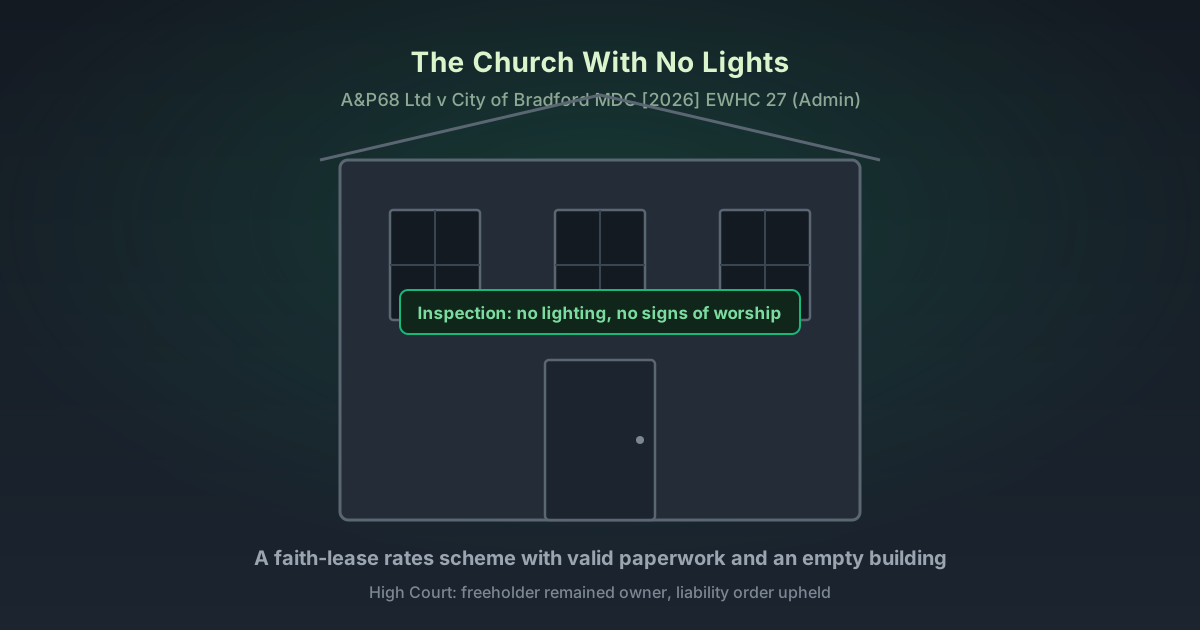
Last week we covered the Court of Appeal’s 48th Street ruling: occupation whose only point is a rates saving is not occupation at all. This piece is the other half of the same story. In A&P68 Ltd v City of Bradford Metropolitan District Council [2026] EWHC 27 (Admin), handed down on 12 January 2026 and worth revisiting now that the Court of Appeal has moved, Mrs Justice O’Farrell confirmed that a lease granted solely to avoid rates does not make the lessee the “owner” either, unless they have a real and practical ability to occupy.
The building in Keighley was a former bank. The scheme put a faith company into the lease chain. An inspection found no electric lighting and no evidence it was used as a place of worship. The freeholder remained liable. We have read the judgment in full. Here is what it decides, how it sits beside 48th Street, and what every owner should now ask of a mitigation arrangement that depends on SPVs, sub-leases, or claimed religious use.
What the scheme tried to do
A&P68 Limited owned 65/73 North Street, Keighley. When the bank became vacant in 2022, the company instructed Verity Commercial Services, a rates mitigation agent. Verity incorporated two companies: Room for Faith Limited in England, and Local Faith Limited in Hong Kong. A&P68 granted a five-year lease at £1 a year to Room for Faith; Room for Faith sub-let to Local Faith on the same day. The stated intention was that Local Faith would use the hereditament for religious worship and engage the exemption in paragraph 11 of Schedule 5 to the Local Government Finance Act 1988.
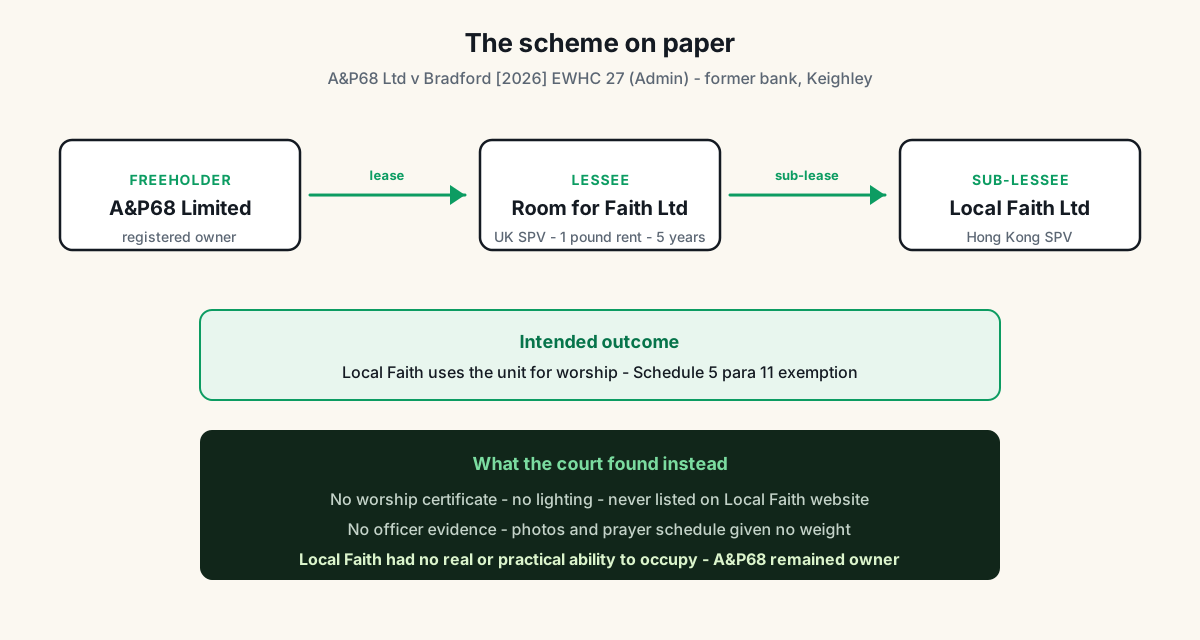
It was common ground that the lease and sub-lease were valid as a matter of property law. It was also common ground that no certificate under the Places of Worship Registration Act 1855 was ever obtained. Without that certificate, the Schedule 5 exemption never applied. Bradford pursued unpaid rates of £14,348.90 for the period from 24 June 2022 to 7 September 2023. District Judge Boyd made a liability order against A&P68 in the magistrates’ court, and the High Court dismissed the appeal that followed by way of case stated.
What the High Court decided
The live issue on appeal was not occupation. District Judge Boyd had already found that Local Faith was not in rateable occupation, and that finding was not challenged. The question was ownership: for an unoccupied hereditament, who is the “owner” under sections 45(1) and 65(1) of the 1988 Act, defined as “the person entitled to possession of it”?
Mrs Justice O’Farrell held that Rossendale Borough Council v Hurstwood Properties [2021] UKSC 16 lays down a single, purposive test. In an ordinary case, the person with the immediate legal right to possession will be the owner. In a rates-avoidance scheme, the court asks whether that person has a real and practical ability either to occupy the property or to put someone else into occupation. A legal right conferred for no purpose other than avoiding rates, without that real-world ability, does not transfer ownership for rating purposes.
The ratio, in one sentence: Local Faith had a paper sub-lease and no real or practical entitlement to possession, so A&P68 remained the owner and the liability order stood.
That reading aligns with the Court of Appeal in Emeraldshaw [2025] EWCA Civ 1601, which Holgate LJ had already clarified: the owner is the person with the immediate legal right to possession unless they have no real or practical ability to exercise it so as to bring the property back into use, and the right was granted only to avoid non-domestic rates.
Why the evidence collapsed
The judgment turns on findings that will be familiar to anyone who has watched a council inspect a staged chapel or an empty “community hub”.
The building itself
Planning use remained a bank. An inspection revealed no electric lighting and no evidence of use as a place of worship. The hereditament had never appeared on Local Faith’s website and had not been made available for worship.
The witnesses
No officer of Local Faith gave evidence. Nobody with direct knowledge of the building appeared. Assertions from the mitigation agent that Local Faith could occupy were treated as unsupported.
The props
Photographs and a prayer schedule were produced. Without proof of who took them, when, or where the schedule came from, the judge gave them no probative weight.
Those findings entitled the judge to conclude that Local Faith was a company on which a legal right to occupy had been conferred for no purpose other than rates avoidance, and that it lacked any real or practical ability to occupy. An alternative argument that Room for Faith was the owner was raised too late and without evidence.
How this sits beside 48th Street
Read together with the Court of Appeal’s 48th Street decision, the empty-rates playbook has had two doors closed on it inside a single year: Bradford in January, the City of London in July.
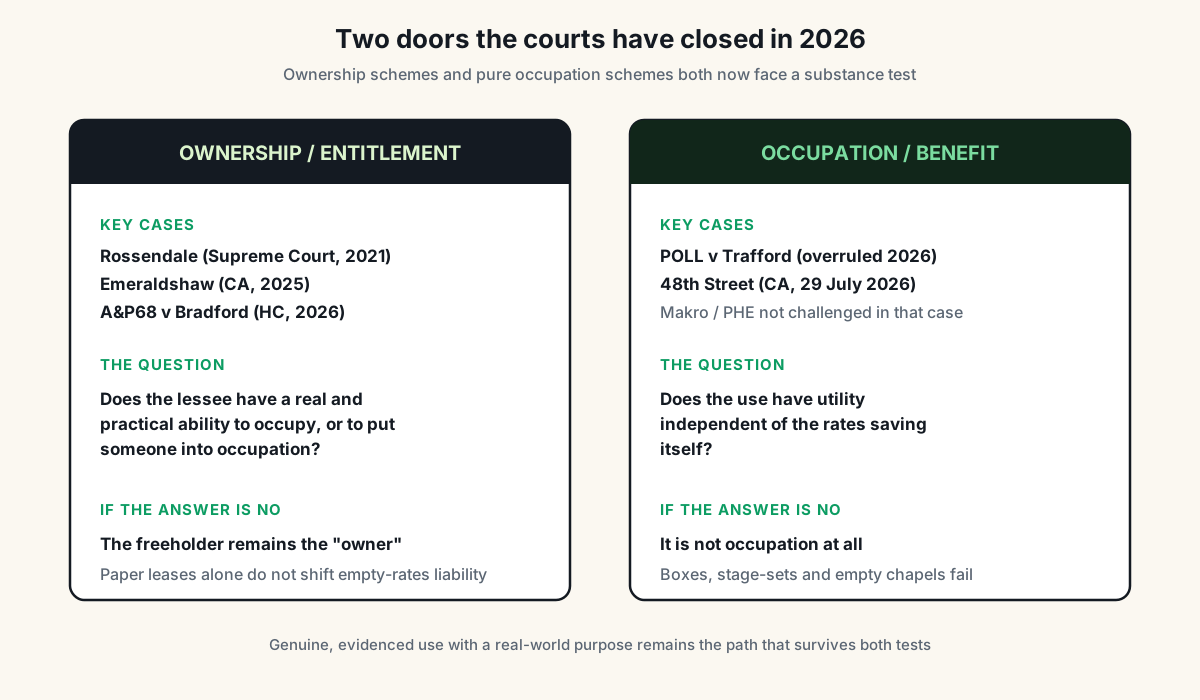
Ownership schemes try to park liability on an SPV or special-purpose lessee that never actually controls the building. Rossendale, Emeraldshaw and now A&P68 ask whether that lessee can, in the real world, bring the property back into use. If not, the freeholder stays on the hook.
Occupation schemes try to manufacture the four limbs of rateable occupation with boxes, redundant stock or stage-set use whose only benefit is the rates saving. 48th Street asks whether the use has utility independent of rating legislation. If not, it is not occupation at all.
Faith-lease structures sit uncomfortably across both questions. If the “church” never opens, never certifies, and never lights the building, there is neither genuine occupation nor a real transfer of entitlement. That is the same substance test we have been arguing for in our reform writing and in our coverage of snail farms and sham occupation: real use, really happening, continuously evidenced.
What owners should ask now
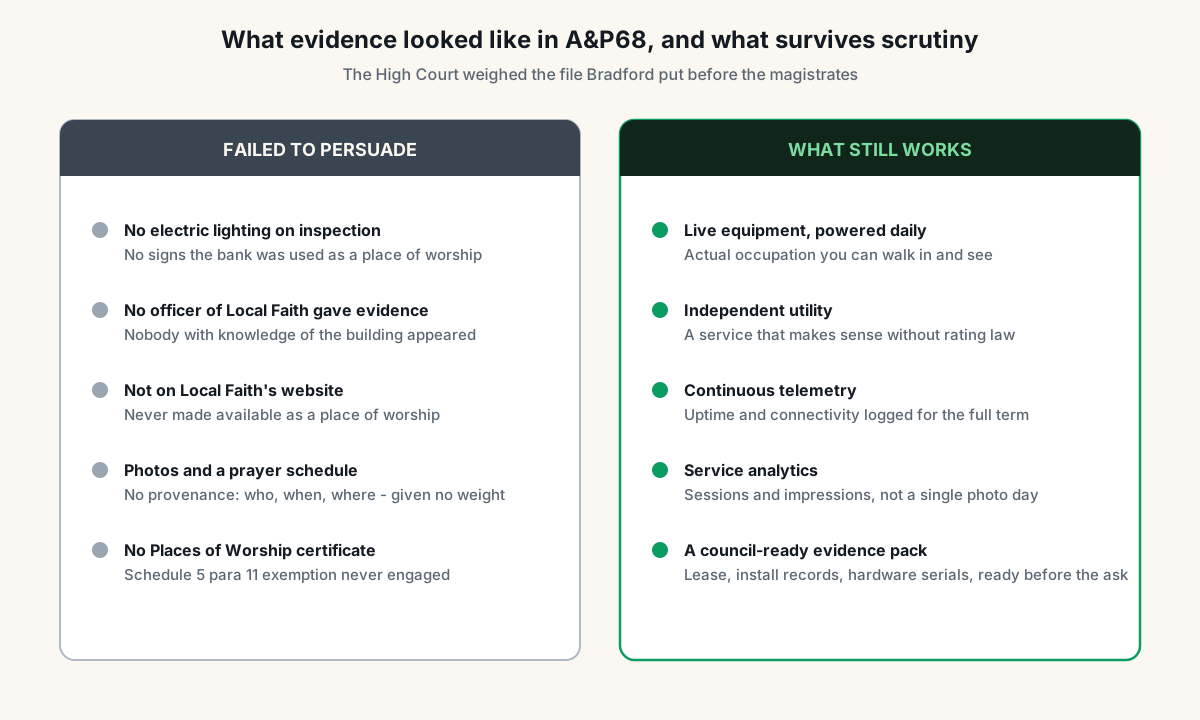
If your current mitigation depends on a special-purpose tenant, a charity or faith wrapper, or any arrangement where the person on the lease is not the person running a real activity in the building, three questions are worth putting in writing this week.
- Who has real and practical control? Not who is named on the lease: who can actually decide to occupy, fit out, power the building, or put a genuine user in. If the answer is still the freeholder or the managing agent, A&P68 says ownership for empty rates has not moved.
- What would a council inspection find tomorrow? Lighting, activity, users, certification where claimed, and people who can give first-hand evidence. A prayer schedule without provenance and a dark bank failed that test in Bradford.
- Where is last month’s continuous evidence? After 48th Street, photographs from installation day are not substance. Ask for logs, analytics, or other independently generated records covering the full term. Our savings calculator will show the empty-rates exposure you are trying to manage; call 0333 090 0443 if you want a straight answer on whether what you already have would survive both tests.
The market that remains
None of this is a court endorsement of any particular provider, ours included. It is a narrowing of the field to arrangements that can show real control and real use. SPVs that exist only to hold a lease, chapels that never switch the lights on, and boxes that only make sense because of the relief rules are the structures the courts are dismantling.
When VacatAd occupies a unit, we install live advertising and WiFi hardware that runs a commercial service for local businesses, under a formal lease, with router telemetry and service analytics for the full term. That model was built to answer the substance questions these judgments are now asking. We would rather be judged on what is happening inside the building. After Bradford and 48th Street, that is where every serious arrangement will be judged.
Source: A&P68 Limited v City of Bradford Metropolitan District Council [2026] EWHC 27 (Admin), Mrs Justice O’Farrell. See also Rossendale Borough Council v Hurstwood Properties [2021] UKSC 16; R (Emeraldshaw Ltd) v Sheffield Magistrates’ Court [2025] EWCA Civ 1601; and City of London v 48th Street Holdings Ltd & Principled Offsite Logistics Ltd [2026] EWCA Civ 970. The information in this piece is general guidance on UK business rates and is not tax, legal or valuation advice.
Ask for substance, not a lease chain
Use the calculator to see your estimated empty-rates exposure on the 2026 list, or talk to us about whether your current arrangement would survive an ownership and occupation substance test.
Try the calculator Get in touch